STYLING SYSTEM
This section highlights my approach to styling as a system—balancing brand direction, local relevance, and commercial performance across apparel categories.
I approach styling as a structured framework rather than isolated looks.
My focus is on creating consistent outfitting principles that support product storytelling, simplify execution for teams, and scale across store formats while remaining adaptable to regional and customer needs.
Outfitting Principles & Silhouette Balance
Styling decisions are guided by outfitting principles such as proportion, layering, and silhouette balance.
These principles ensure looks feel intentional and aligned with brand direction, while remaining accessible and easy to interpret at store level.
Proportion
Layering
Silhouette balance
Color Flow & Assortment Cohesion
Color flow is developed to support visual rhythm and storytelling across walls, fixtures, and mannequins.
I consider seasonal palettes, tonal balance, and contrast to maintain cohesion while allowing key products to stand out.
Color flow
Category flow
Cohesion
Scalable Styling Systems
Styling systems are designed to be repeatable and easy to execute across multiple stores.
Clear rules around outfitting, spacing, and product pairing allow teams to maintain consistency while adapting to store size, category mix, and regional preferences.
Repeatability
Category mix
Store availability
Styling Systems in Practice


Styling Systems in Practice

System-Led Outfit Building
This styling example demonstrates a repeatable outfitting system built on neutral palettes, functional layering, and accessory integration, enabling consistent execution across multiple store formats.
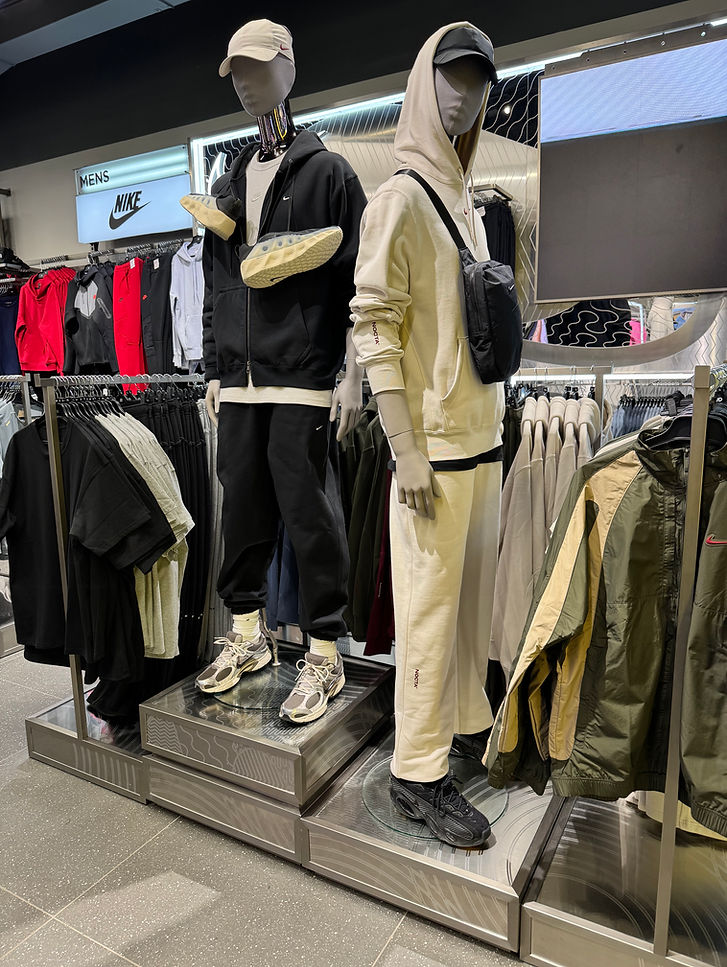
Scalable Styling Logic Across Silhouettes
A tonal styling approach that balances proportion, footwear focus, and accessory placement, allowing easy adaptation across genders, categories, and regional assortments.